
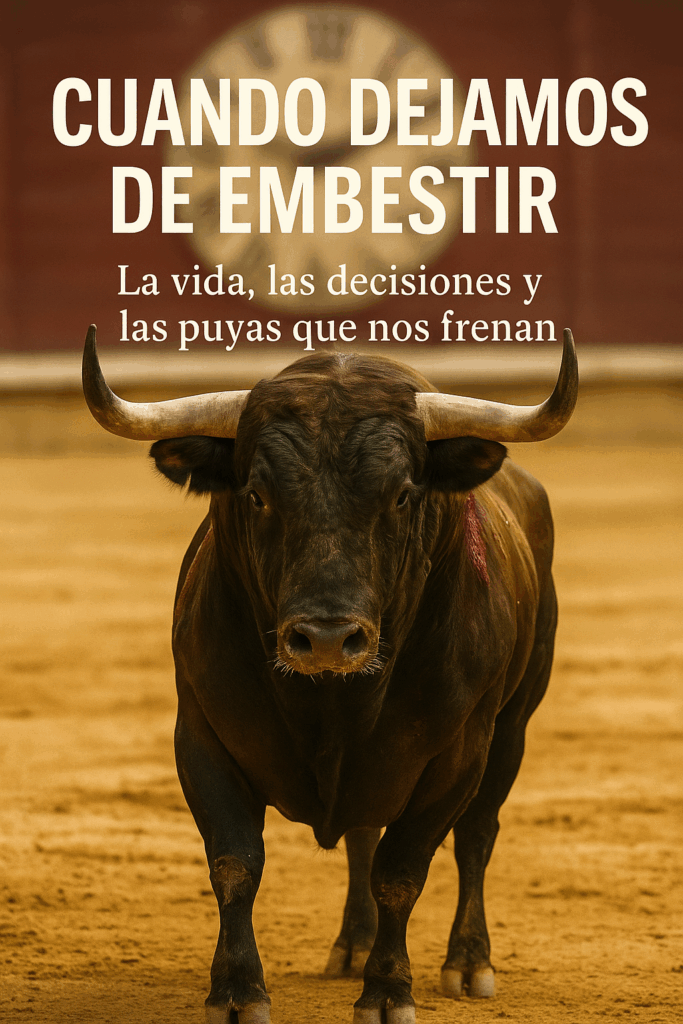
Al inicio de una corrida de toros el toro entra con fuerza, con bravura, con esa energía animal que parece imposible de domar. Cada músculo está listo para embestir, cada mirada desafiante reclama espacio; pero a medida que avanza la corrida con las puyas, los golpes y el desgaste físico, esa vitalidad se reduce. Ya no queda el mismo ímpetu para pelear; sólo queda la resistencia suficiente para sobrevivir.
Esta metáfora es brutal, pero certera en muchos casos. La gran mayoría de nosotros comenzamos nuestra vida con la misma energía del toro en su salida (si tienes dudas, pregunta a tus papás); niños y adolescentes deseosos de probar cosas nuevas, de arriesgar y de abrirnos camino a pesar de los obstáculos. Sin embargo, conforme pasan los años, acumulamos cicatrices: la rutina, los fracasos, los “no se puede” que escuchamos, los “nadie lo ha logrado”, los “es una locura”, la búsqueda constante de aprobación y de encajar con nuestro entorno. Todo esto va funcionando como esas puyas que desgastan la bravura del toro. Lo que antes nos entusiasmaba, ahora nos intimida; o, como lo percibimos más complicado, preferimos voltear hacia otro lado y dejarlo pasar. Lo que antes nos movía, ahora nos da pereza. Y así, poco a poco, dejamos de tomar decisiones que nos hagan probar cosas nuevas o ser felices.
La vida después de las primeras embestidas
Arthur Schopenhauer decía que la vida oscila entre el sufrimiento y el aburrimiento. Y es cierto: cuando somos jóvenes sufrimos porque queremos más de lo que podemos alcanzar, y al envejecer el riesgo es otro: que el aburrimiento se vuelva nuestra zona cómoda. Dejamos de decidir no por falta de opciones, sino por miedo o cansancio.
Y en lo laboral no hay mucha diferencia; la metáfora se repite. El joven profesional entra con hambre, con propuestas, con ideas disruptivas y sin miedo a expresar lo que piensa y a aprender (quizás ahí está el problema: aprende lo malo si le toca un jefe o una empresa mediocres). El tiempo pasa y, tras varios jefes indiferentes, proyectos ignorados y recortes en empresas aniquiladoras de creatividad, las ganas de innovar se vuelven ganas de llegar a la quincena en paz. Vaya puyas que nos da la vida, puyas psicológicas.
El sociólogo Max Weber advertía del “hierro de la burocracia”, esa jaula que poco a poco domestica a las personas. Lo vemos en quienes dejaron de proponer porque “nunca me hacen caso”, en los que dejan de crecer porque “ya no vale la pena moverle”, en los que ya no prueban cosas nuevas porque “tengo familia y compromisos, no los puedo poner en riesgo con mis decisiones”. Y sin darnos cuenta, pasamos de pelear por lo que pensamos y queremos a simplemente esquivar las puyas para vivir y morir “tranquilos”, aunque muy en el fondo sepamos que eso no nos deja nada bueno.
Y qué decir en nuestra vida cotidiana: aquí nada es distinto. Muchos dejamos de probar cosas nuevas porque ya fuimos lastimados varias veces:
- Una relación fallida nos convence de no volver a abrir el corazón.
- Un intento de negocio frustrado se convierte en la excusa para no emprender de nuevo.
- Una mala experiencia con la salud nos hace temerosos incluso de intentar actividades básicas, ya no digamos de actividades que amamos.
Nietzsche decía que “quien tiene un porqué para vivir puede soportar casi cualquier cómo”, y eso es lo que las puyas nos quitan: el porqué vivimos. El tema aquí es que muchos perdemos ese “porqué” a base de puyas diarias: críticas, miedos, golpes emocionales. Así, lo que queda no es vivir, sino resistir.
Y después, ¿saben qué hacemos?… ¡heredamos puyas! Así es, no contentos con estar dañados nosotros (sin querer, quiero pensar) dañamos a otros. Qué hijos de puta somos a veces.
El costo de dejar de decidir
¿Saben algo? Creo que el peligro no está en las puyas en sí, sino en cómo reaccionamos ante estas. Hay quienes, a pesar de las heridas, siguen embistiendo, siguen buscando la salida con fuerza, siguen creyendo en lo que piensan. Otros, en cambio, se repliegan hasta conformarse con lo mínimo. Y ahí está el verdadero riesgo: conformarse a vivir en piloto automático.
El psicólogo Erik Erikson señalaba que cada etapa de la vida plantea un reto: o sigues creciendo o te estancas. Y realmente creo que no hay más. Y les diré algo para aquellos que piensan que estar sin hacer nada es una opción: decidir no decidir también es estancarse. Y esa, mis queridos lectores, es la derrota más silenciosa y la peor, porque puede convertirse en algo permanente.
Conclusión
En resumen: el vivir siempre va a traer de forma inherente puyas de cualquier tipo, no importa la edad; no vayas a creer que con el tiempo estas desaparecen. La diferencia estará en si dejamos que nos dominen hasta quedarnos parados, o si seguimos embistiendo aunque ya no corramos como antes y duela un poco más. Porque créeme lo que te digo: si no decides probar nada nuevo, te perderás ese sabor que deja el vivir plenamente. Y seamos honestos: ni el toro nació para caminar en el ruedo sin embestir y luchar, ni nosotros nacimos para no vivir plenamente lo poco o mucho que estemos en este plano de existencia.
________________________________________________________________________________________________
When We Stop Charging: Life, Decisions, and the Puyas That Hold Us Back
At the beginning of a bullfight, the bull enters with strength, with bravery, with that animal energy that seems impossible to tame. Every muscle is ready to charge, every defiant look claims its space; but as the fight goes on, with the puyas, the blows, and the physical exhaustion, that vitality fades. The same drive to fight is no longer there; only the bare resistance to survive remains.
This metaphor is brutal, but in many cases accurate. Most of us begin our lives with the same energy as the bull at the start (if you’re in doubt, ask your parents); children and teenagers eager to try new things, to take risks, to make our way despite obstacles. However, as the years go by, we accumulate scars: routine, failures, the “it can’t be done” we hear, the “nobody has ever done it,” the “it’s crazy,” the constant search for approval and for fitting in with our environment. All of this works like those puyas that wear down the bull’s bravado. What once excited us, now intimidates us; or, as we perceive things as more complicated, we prefer to look away and let it pass. What once moved us, now makes us lazy. And little by little, we stop making decisions that would let us try new things or be happy.
Life After the First Charges
Arthur Schopenhauer said that life swings between suffering and boredom. And it’s true: when we’re young, we suffer because we want more than we can reach; when we get older, the risk is another: boredom becoming our comfort zone. We stop deciding not because of a lack of options, but because of fear or fatigue.
And in the workplace it’s not much different; the metaphor repeats itself. The young professional enters with hunger, with proposals, with disruptive ideas and no fear of expressing what they think or of learning (perhaps there’s the problem: they learn the bad if they land a mediocre boss or company). Time goes by and, after several indifferent bosses, ignored projects, and cuts in creativity-killing companies, the desire to innovate turns into the desire to simply make it to payday in peace. What puyas life gives us—psychological puyas.
Sociologist Max Weber warned of the “iron cage of bureaucracy,” that cage that slowly tames people. We see it in those who stopped proposing because “nobody listens to me,” in those who stopped growing because “it’s not worth the effort anymore,” in those who stopped trying new things because “I have a family and responsibilities, I can’t put them at risk with my decisions.” And without realizing it, we go from fighting for what we think and want to simply dodging the puyas in order to live and die “quietly,” even though deep down we know that leaves us nothing good.
And what about in our daily life? Here it’s no different. Many of us stop trying new things because we’ve been hurt too many times:
- A failed relationship convinces us never to open our heart again.
- A failed business attempt becomes the excuse never to try again.
- A bad health experience makes us fearful of even attempting basic activities, let alone the ones we love.
Nietzsche said that “he who has a why to live can bear almost any how,” and that is exactly what the puyas take from us: our why. The problem is that many of us lose that “why” through daily puyas: criticism, fear, emotional blows. What’s left is not living, but merely resisting.
And then, do you know what we do?… We pass on puyas! That’s right, not content with being damaged ourselves (unintentionally, I’d like to think), we damage others. What bastards we can be sometimes.
The Cost of Not Deciding
You know what? I think the danger is not in the puyas themselves, but in how we react to them. Some people, despite the wounds, keep charging, keep looking for a way out with strength, keep believing in what they think. Others, on the other hand, retreat until they settle for the bare minimum. And there lies the real risk: settling into living on autopilot.
Psychologist Erik Erikson noted that every stage of life presents a challenge: either you keep growing, or you stagnate. And I truly believe there’s nothing else. And let me tell you something for those who think doing nothing is an option: deciding not to decide is also stagnation. And that, my dear readers, is the most silent defeat and the worst, because it can become permanent.
Conclusion
In short: living will always bring puyas of every kind; no matter your age, don’t think that with time they disappear. The difference lies in whether we let them dominate us until we stand still, or if we keep charging even if we can’t run like before and it hurts a little more. Because believe me when I tell you: if you don’t decide to try anything new, you’ll miss out on that taste that comes from truly living. And let’s be honest: the bull wasn’t born to walk around the arena without charging and fighting, and we weren’t born to live anything less than fully the little or much time we have on this plane of existence.
Chơi thử super ace demo trước khi bỏ tiền mua là ý tưởng siêu hay! Mình được trải nghiệm đầy đủ tính năng mà không mất đồng nào, cảm ơn trang web!
Thank you for your message. This blog is dedicated to reflections and insights on life and business, so we don’t cover gaming or casino-related topics. I invite you to explore the blog’s articles and follow me on YouTube @rafaelantonioibanezcantu6768 and TikTok @rafaelibanezcantu, where I share videos focused on personal and professional growth.